Vernal Pools: A Queer Ecology
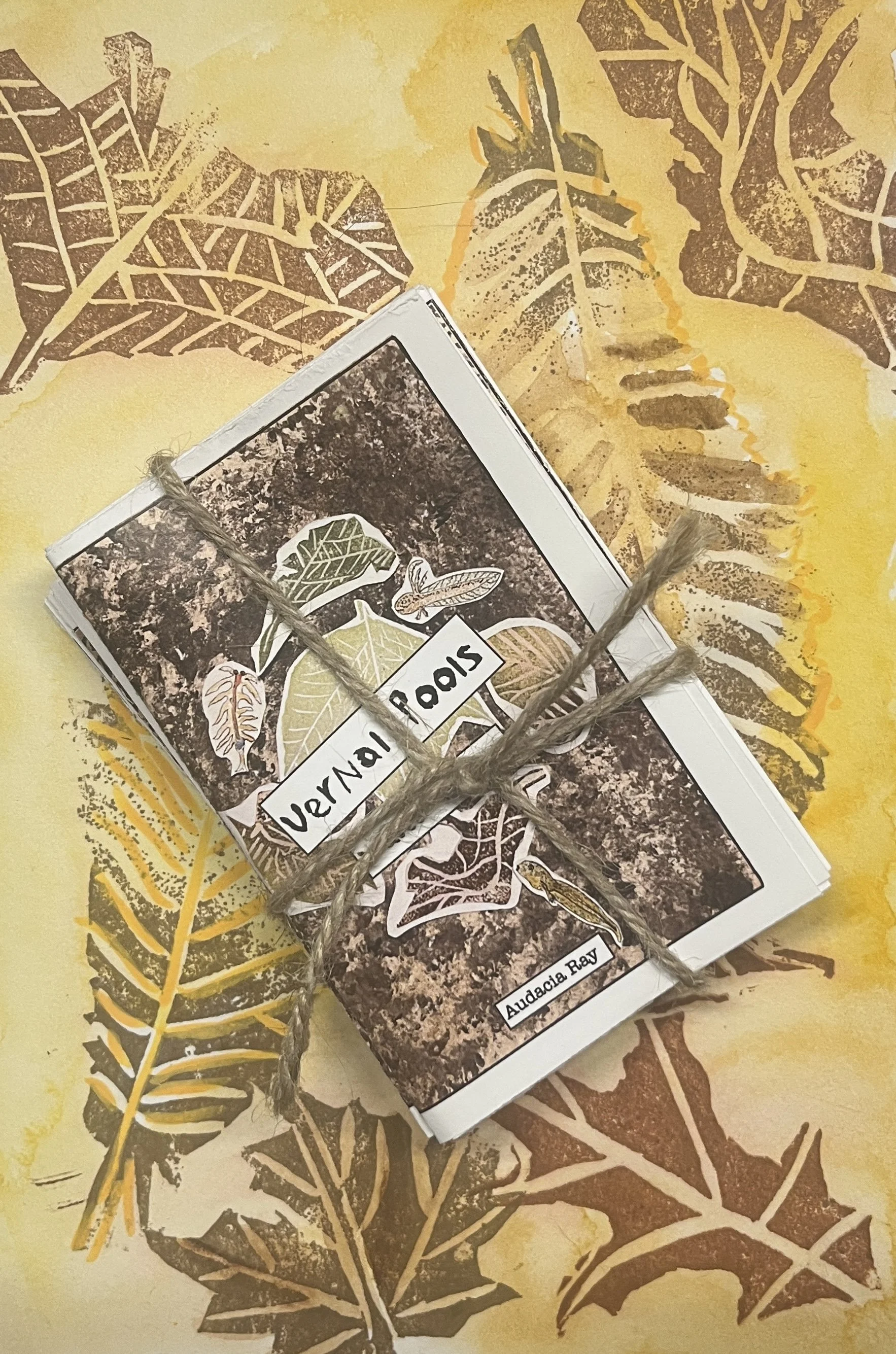
Hello! You may have landed on this page because you found a copy of my zine Vernal Pools: A Queer Ecology out in the wild. Or you’ve been clicking around the internet and you’re wondering what-all art and swamp things I’m up to in addition to my regular scheduled nonsense.
If you would like a (free) pack of 10 minizines to share at your queer land project, coffee shop, bar, library, outdoor adventure shop, or (dis)similar community space AND will give them away for free - please get in touch with me: hey[at]audaciaray.com.
I would also love to hear from folks who have ideas about possible collaborations. Pitch me something peculiar!
Below, I’ve added sources that were vital to me as I have done this research and made this zine.
The Project
Vernal Pools: A Queer Ecology is a zine of hand-carved and direct from nature prints, made on acorn-dyed papers and featuring paintings of amphibians, crustaceans, and plants who depend on vernal pools to survive and thrive in New York’s Hudson River Estuary.
The zine is the pilot work of an expansive educational and interpretative queer ecology project that asks the questions: What is natural? Who decides how we value living communities? How can we protect communities that are marginalized, isolated, or not well understood? Amidst these contemplations, the project digs deep into ecological and conservation concerns about the creatures who depend on vernal pools to survive and thrive.
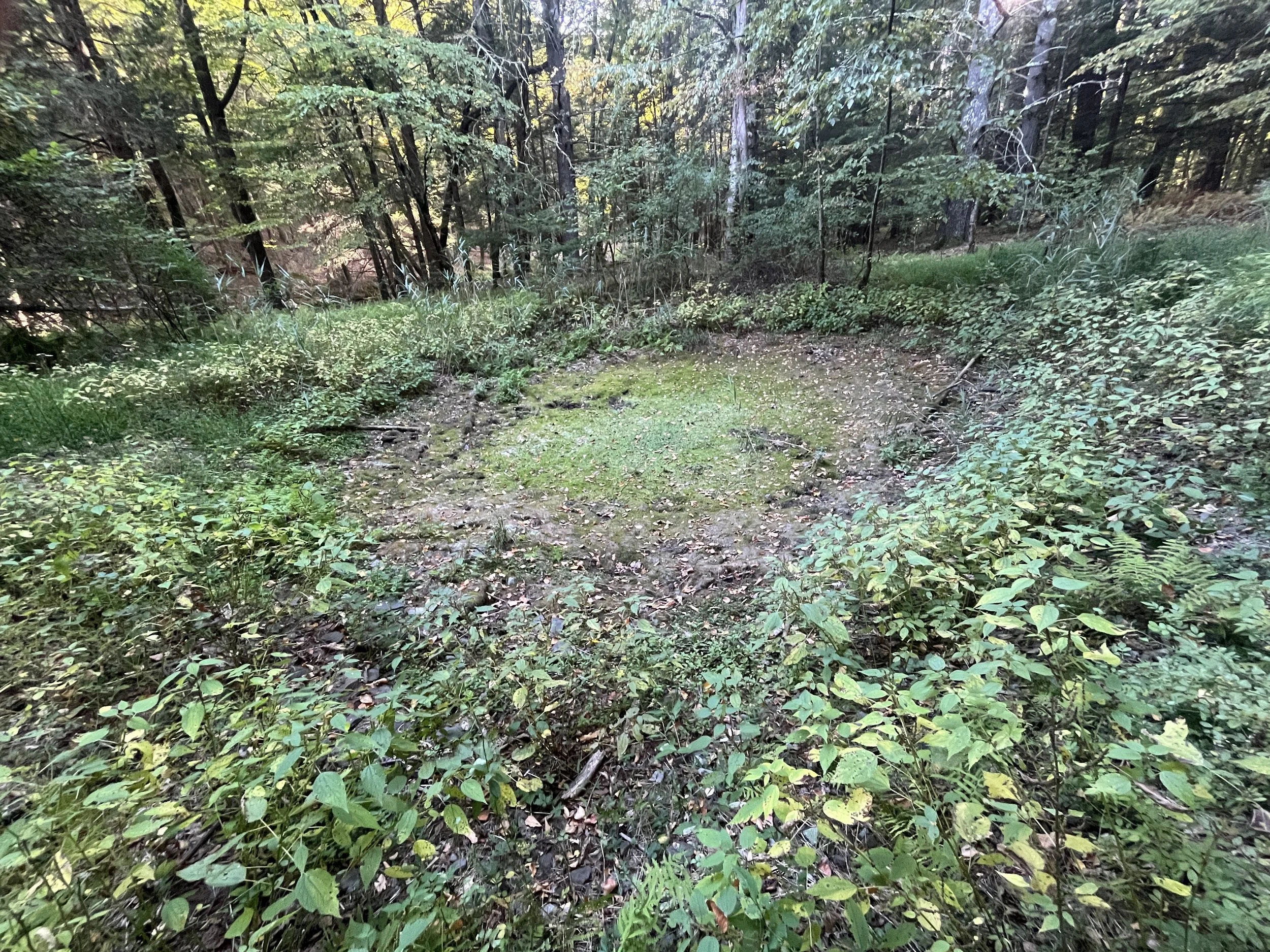
A photo of a dry vernal pool in the Catskill Mountains, September 2025.
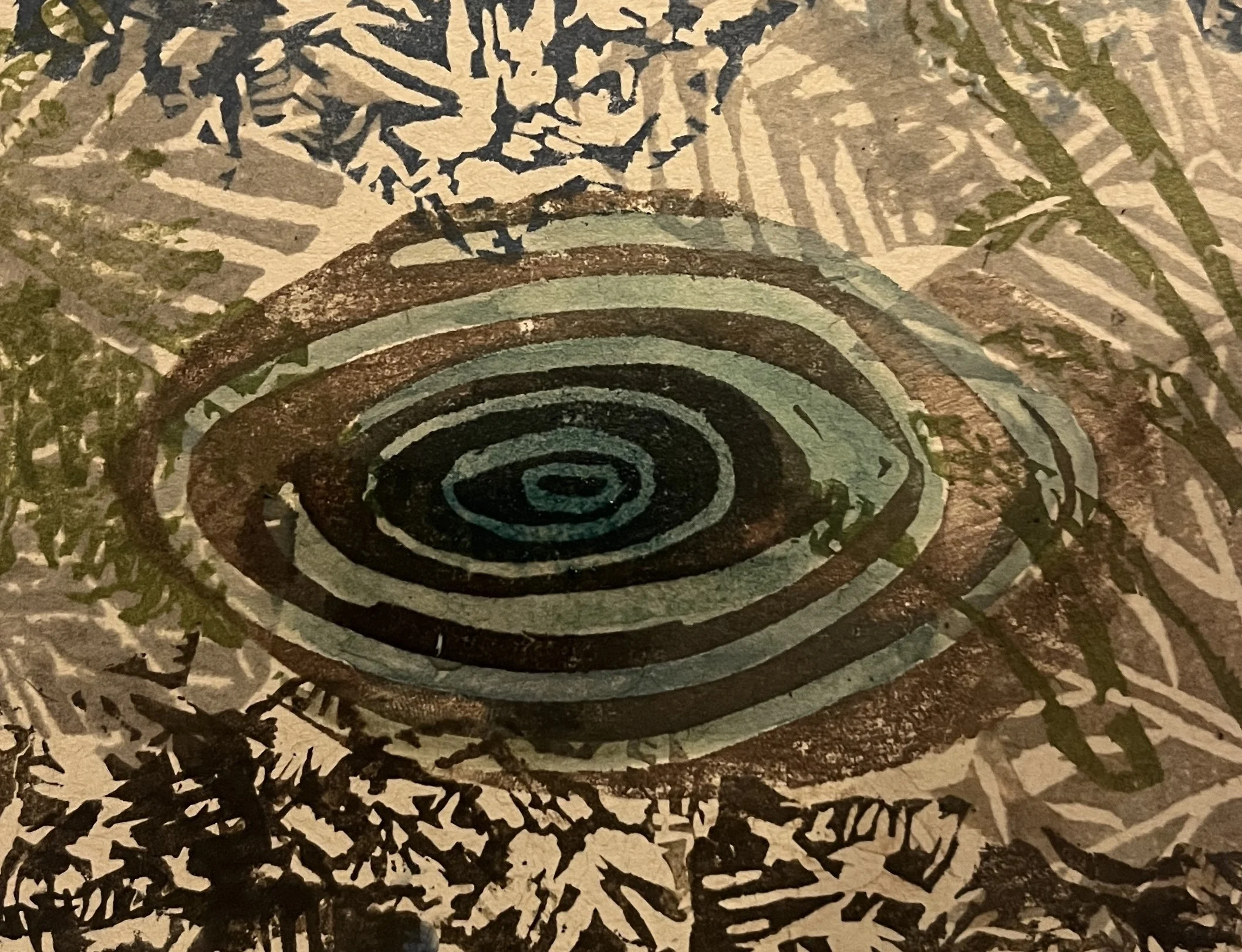
An artistic rendering of the same. Hand-carved rubber stamps, ink, and watercolor on acorn-dyed paper. October 2025.
What is a vernal pool?
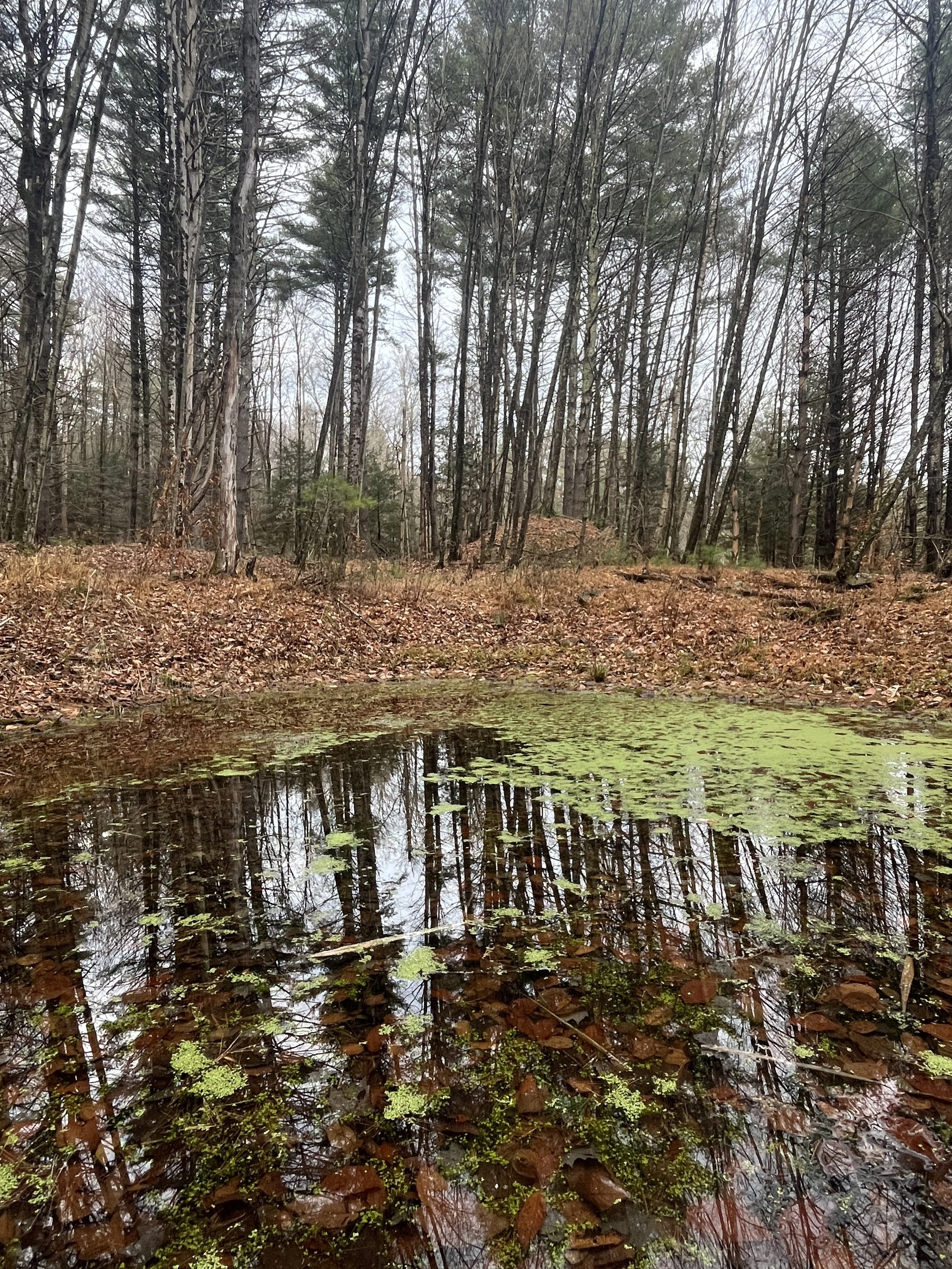
Vernal pools are temporary wetlands - small ponds that aren’t connected to surface water and don’t have fish - located in forests in the American northeast.
Vernal pools fill up with water in the spring and play the role of breeding grounds for several species of animals that completely depend on these pools as part of their survival. They dry back out by late summer, at which point creatures either dry up and take a season or two long nap, or they head off into the forest as terrestrial creatures.
Read more about vernal pools online:
Vernal Pool Guide - New York Natural Heritage Program
Monitoring an Island of Water in a Sea of Forest - Northern Woodlands
Vernal Pool Conservation Resources - Vermont Center for Ecostudies
Delve deeper with these books:
Meet Some Vernal Pool Creatures
and explore ecology & conservation resources
Fairy Shrimp
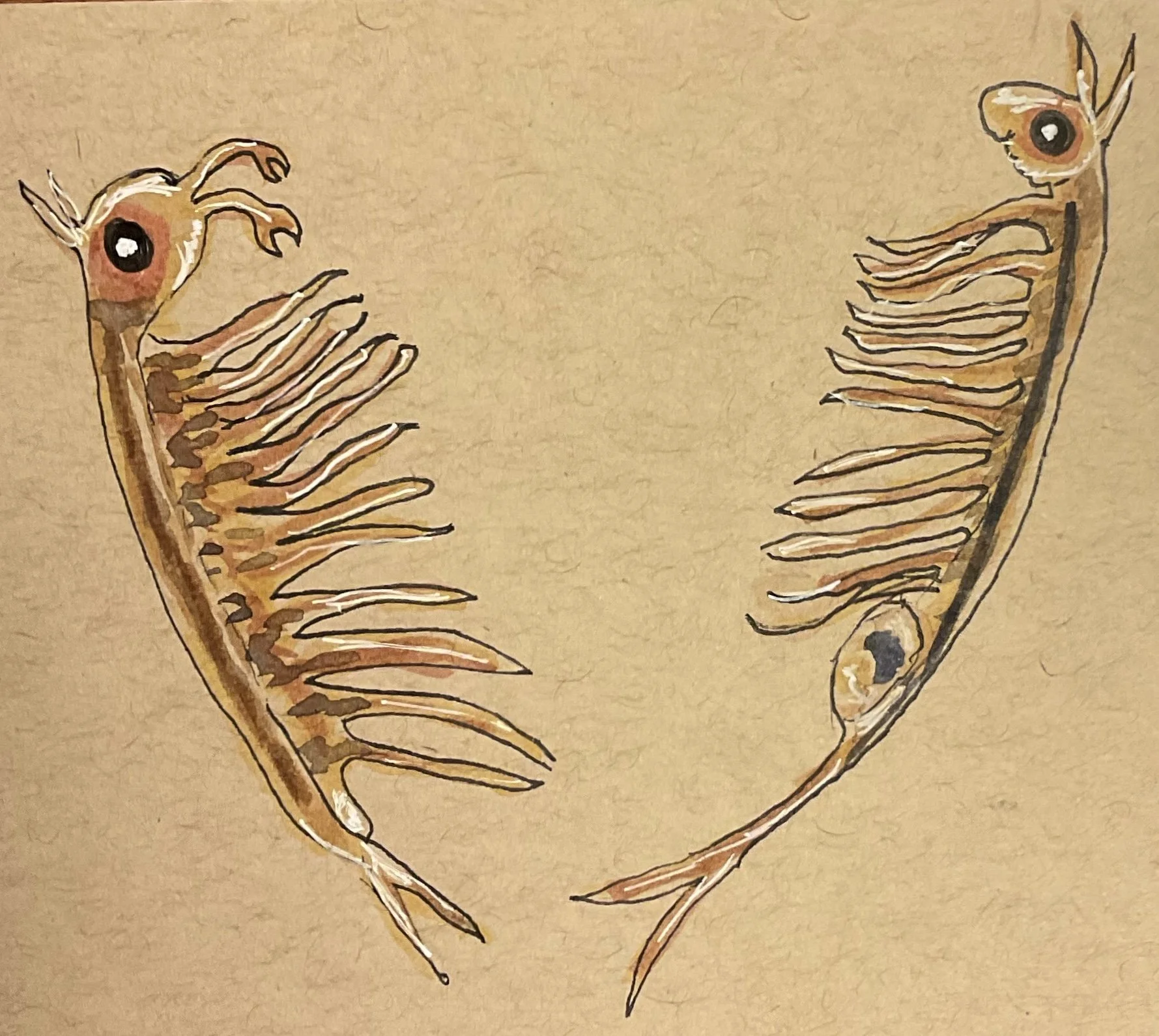
Fairy shrimp are inch-long vernal pool crustaceans that swim upside down at the surface of the pool’s water. They are filter feeders that help break down plant matter. They are bright orange, grow into adults in just a few months, and their eggs (called cysts) can remain dormant and desiccated for years in the basin of a vernal pool.
Learn more: Careful Where You Step - Fairy Shrimp May Be Underfoot
Spotted Salamander
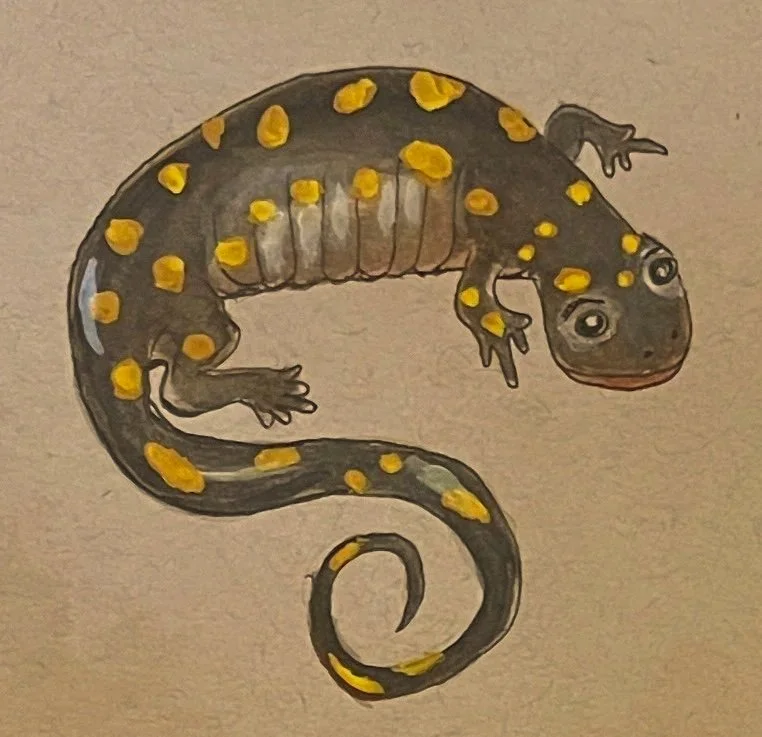
Spotted salamanders are one of the most obsessed-over vernal pool creatures. Adults gather at vernal pools once a year to mingle, breed, and attach their egg masses to sticks. As the embryos develop, they develop a symbiotic relationship with algae - they are the only known vertebrate that can photosynthesize through this collaboration. Larvae grow external gills and swim until they start to grow legs and lungs - adults become terrestrial and can live more than 20 years.
Learn more about how Salamander Symbiosis Stress Green Algae
Wood Frog
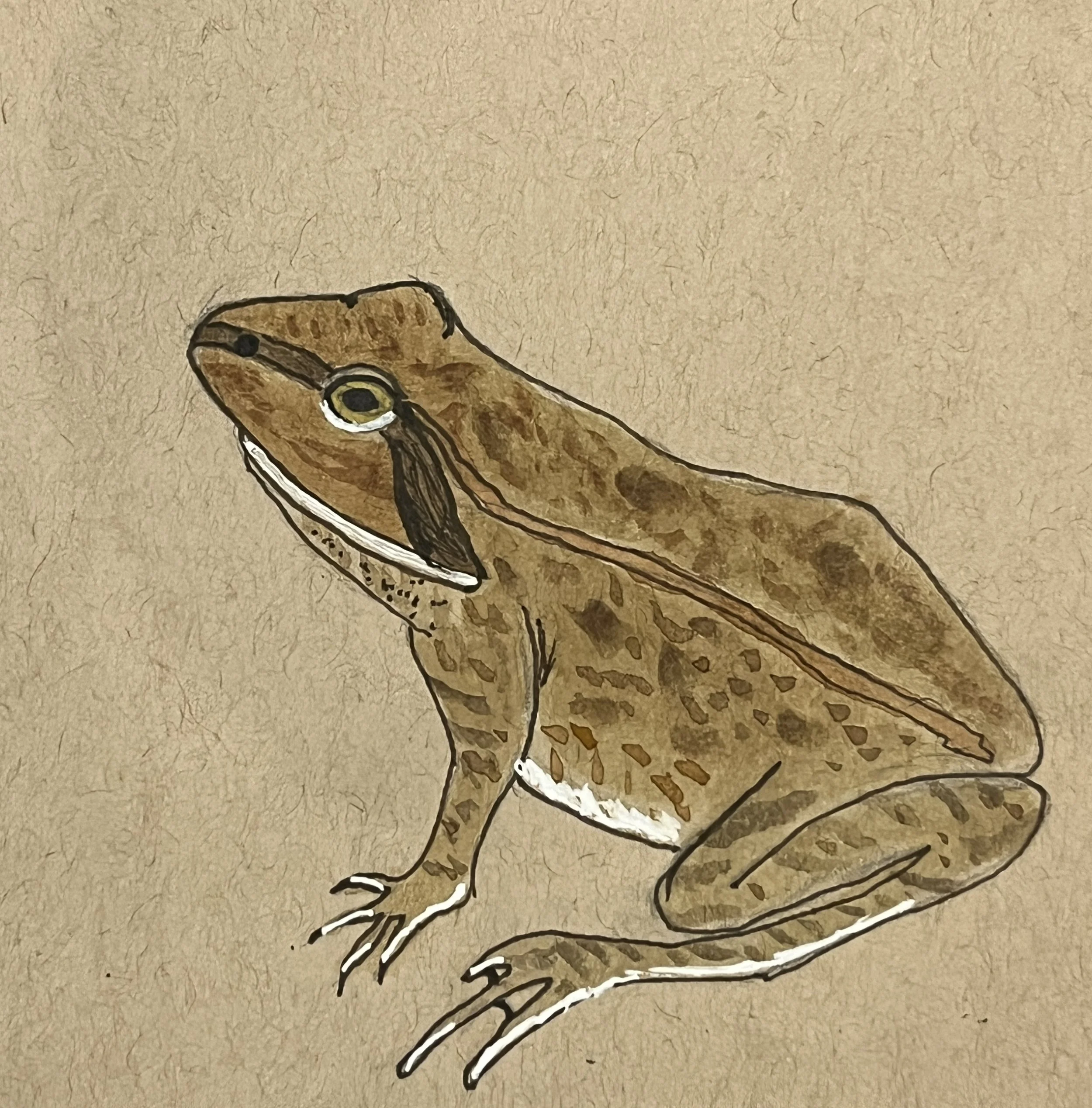
Wood frogs are the vernal pool denizen that roam the farthest from their natal pools - they typically travel about 1000 feet but can venture up to a mile. They have a similar life cycle to the spotted salamander - except when they transition from tadpole to juvenile, they develop their powerful hind legs first, while salamanders grow front legs. During winters, they freeze into what is essentially a frogsicle - up to 70% of their body becomes frozen and biological function ceases. This process is controlled by urea and liver function. When the thaw comes, they activate, thaw and become very hungry frogs who really have to pee.
Striped Maple
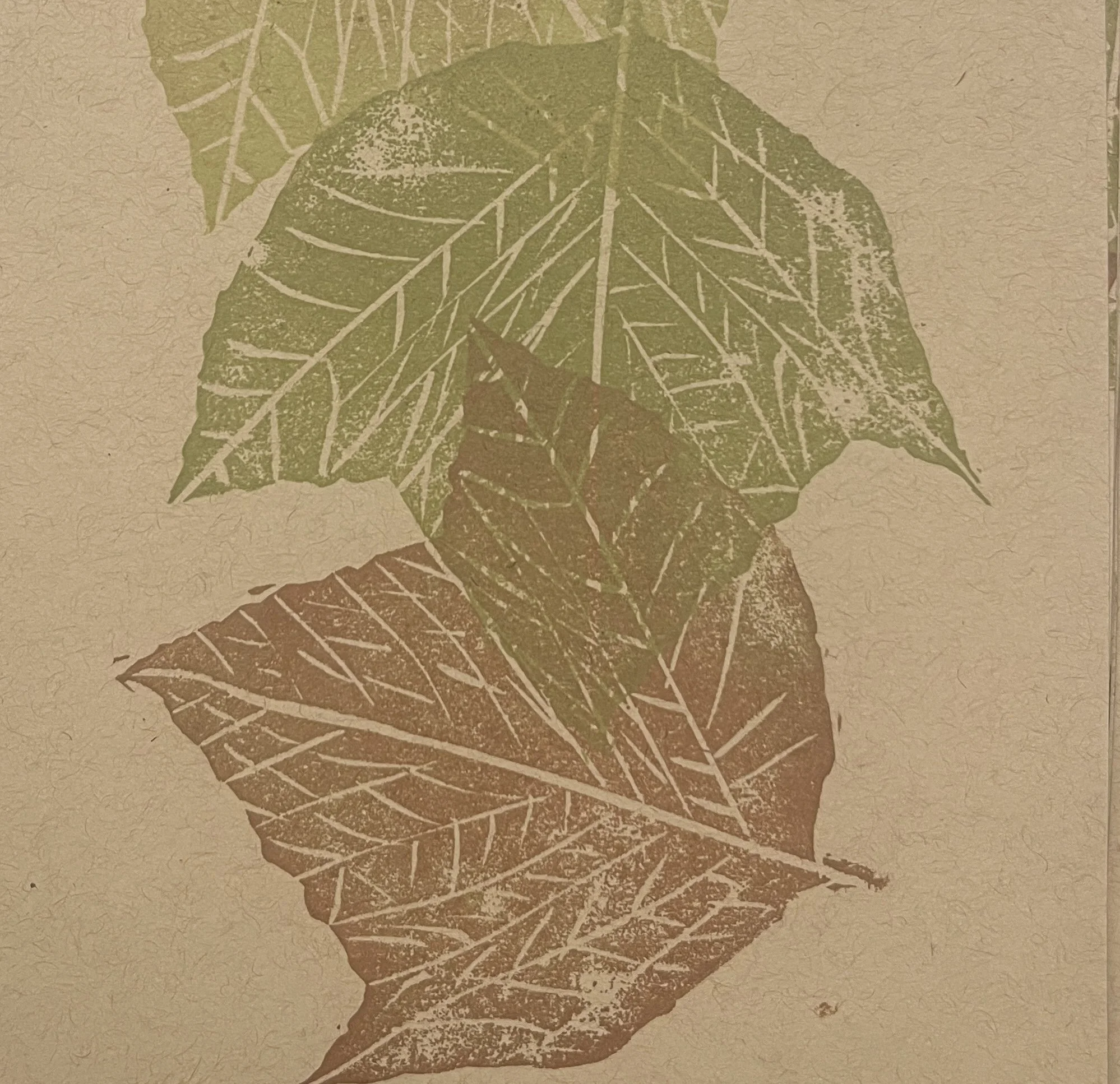
Striped maple trees are extremely common understory trees that often grow nearby vernal pools. Even if you never see any of other vernal pool obligate species - you’ve probably seen many different varieties of maple trees. As many as 54% of striped maples have been observed to change sex in a four-year period, with 26% of them changing sex more than once.
Check out the research with this Annals of Botany article, Time for a change: patterns of sex expression, health and mortality in a sex-changing tree.